
…ganz im Stil der W3C-Specs 🙂

Ist auf alle Fälle sehr schick geworden!
…ganz im Stil der W3C-Specs 🙂
Ist auf alle Fälle sehr schick geworden!
Für den Podcast zum Thema Microformats hab ich mich mal schlau gemacht wie weit verbreitet die einzelnen Formate gerade sind.
| Microformats | Verbreitung |
|---|---|
| hCard | 1,590,000,000 |
| hAtom | 374,000,000 |
| XFN | 283,000,000 |
| hResume | 155,000,000 |
| hReview | 75,100,000 |
| hCalendar | 55,100,000 |
Quelle: SearchMonkey (Yahoo!)
Mehr als 1.5 Milliarden hCards, ich finde das Ergebnis kann sich sehen lassen 🙂
Sehr (positiv) überrascht war ich auch über die Verbreitung einzelner RDFa und eRDF Formate:
(X)HTML wird vielleicht doch noch ein RDF/OWL Ersatz 🙂
Ich lese in letzter Zeit wieder immer häufiger von Microformats-Implementierungen im Internet Explorer 8. Geht es da „nur“ um die schon angekündigten Webslices? Weiß jemand mehr?
Übrigens hat Mix Online, „a community for web designers and developers“ von Microsoft, gerade ein recht schickes Microformats Toolkit mit dem Namen Oomph veröffentlicht.
(mehr …)Spätestens jetzt sollte ja wirklich jeder Internet-Bewohner seine eigene OpenID haben… ob er weiß ist eine andere Geschichte 🙂
…und das sollte doch wiederum Grund genug sein seine Seite sofort OpenID tauglich zu machen, nachher wissen die armen Menschen gar nicht wohin mit ihrer OpenID…
Spaß beiseite… natürlich besteht generell nicht das Problem an fehlenden OpenID-Providern, aber die Ankündigungen von Microsoft und Google sollten bisherigen Zweifeln dennoch signalisieren, dass OpenID der aktuelle de facto Standard für Single Sign-On im Web sein dürfte.
Mehr zu dem Thema:

Pixelsebi hatte die großartige Idee zu einem Open Web – Podcast. Ich hoffe wir bekommen das gebacken 🙂
Dass sich das Portable Contacts Schema trotz der Aussage:
Third, we’re reusing existing standards wherever possible, including vCard, OpenSocial, XRDS-Simple, OAuth, etc.
von dem des v/hCard Schema unterscheidet, habe ich ja schon vor einigen Wochen erläutert:
Schade dass die vCard nicht zu 100% übernommen wurde… sonst hätte man ohne größere Änderungen auch die JSON-Serialisierte hCard (jCard) in den Prozess integrieren können. Spannend wäre es vor allem für Services wie Twitter, die das Freundesnetzwerk sowieso mit hCards auszeichnen.
Aber das schöne an Standards ist, dass sie sich ohne großen Aufwand in andere transformieren lassen. Magdex (die Firma hinter UfXtract und OAuth.net) bietet eine Reihe dieser Transformatoren um z.B. hCards, hCards + XFN oder hResumes in das Portable Contacts – Format zu bringen.
…jetzt das ganze nur noch mit OAuth schützen und fertig ist die Portable Contacts API 🙂
(via)
Nach der Demo von Brian Ellin auf dem Portable Contacts Summit…
Brian Ellin of JanRain has successfully combined OpenID, XRDS-Simple, OAuth, and the Portable Contacts API to start showing how each of these building blocks should come together.
und der Ankündigung, Portable Contacts in myOpenID zu integrieren…
Portable Contacts is an emerging standard for transferring profile data and social connections across websites. Look for upcoming support of this new standard in myOpenID!
…habe ich endlich auch eine funktionierende Demo im Web gefunden. Notwendig für die Testanwendung sind ein myOpenID Profil und ein Plaxo-Account.
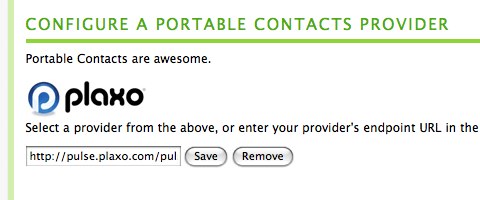
Zuerst muss man über den myOpenID Einstellungen Plaxo als seinen Portable Contacts – Provider angeben,
sich mit seiner OpenID an der Demoseite anmelden,

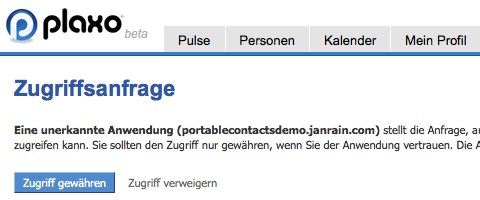
den Zugriff auf die eigenen Daten gewähren
und die Demo-Anwendung bekommt meine Kontakte übermittelt.
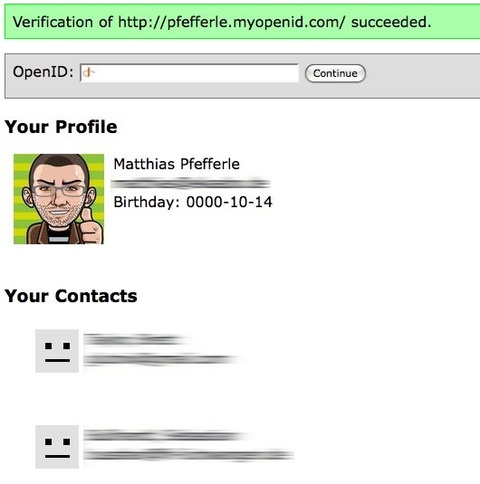
Im besten Fall laufen diese Schritte völlig automatisch ab und der Anwender hat nicht mehr zu tun als seine Einverständniserklärung per Knopfdruck zu geben. Ein schöner Anwendungsfall für dieses Beispiel wäre z.B. eine OpenID-Neuanmeldung bei einer Community mit anschließendem Import aller Kontakte.
Was ich an diesem Beispiel außerdem sehr schätze ist, dass JanRain die Portable Contacts API in seinen OpenID-Provider integriert hat ohne sie wirklich integriert zu haben… Der Fokus von myOpenID bleibt weiterhin auf OpenID und die Portable Contacts Anfragen werden lediglich über XRDS-Simple an z.B. Plaxo weiterdelegiert.
So zentral kann dezentral sein 🙂
So zu sagen das OSI-Model des Social Webs.
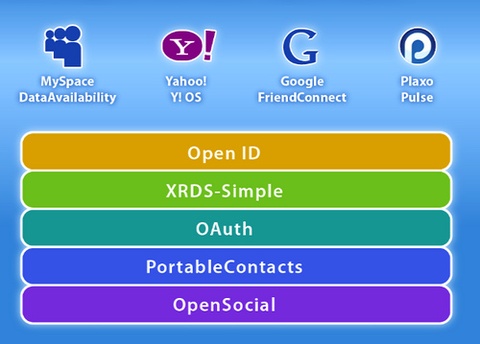
Quelle: John McCrea
Aus Joseph Smarrs Präsentation Implementing the Open Web, gehalten auf der Web 2.0 Expo in New York.
Plaxo setzt voll auf den neuen (großen?) Building-Block Portable Contacts (Portable Contacts is now Plaxo’s primary API):
We’ve been early adopters and evangelists for several of these building blocks, including OpenID, OAuth, OpenSocial, and microformats. And recently we’ve also helped lead the charge to build another key piece of the „open stack“: a common API standard for accessing address book, profile, and friends-list data called „Portable Contacts“.
Die API-Section von Plaxo weist jetzt eine beachtliche Anzahl an offenen Standards auf:
We’ve revamped Plaxo’s developer section to focus primarily on the open building blocks we’re using. Starting now, developers should consider OAuth and Portable Contacts the primary way to access profile, address book, and pulse connections data from Plaxo.
Vorbildlich!
Eine weitere Ankündigung (via Newsletter) kommt vom OpenID-Provider myOpenID, der (in Person von Brian Ellin von JanRain) ja schon auf dem PortableContacts Hackathon eine umfassende Demo zum besten geben konnte.
Portable Contacts is an emerging standard for transferring profile data and social connections across websites. Look for upcoming support of this new standard in myOpenID!
Dieses Feature würde mich dann doch davon abhalten mein eigener OpenID-Provider zu sein 🙂
Will Norris hat vorgestern ausführlich über die neuen Features seines WordPress-Plugins berichtet. Das wohl interessanteste Feature von wp-openid 3.0 ist der neue OpenID-Provider:
The next major release of wp-openid includes a built-in OpenID provider and delegation engine. This will certainly be the most exciting feature of this release for most people, so let me explain a bit how it works. Each authorized user on the WordPress blog will have an OpenID at the author posts URL (ie. http://example.com/author/admin). Authorization to use the OpenID provider is controlled based on user roles and is managed in the main OpenID settings page.
Das Plugin kann in zwei verschiedenen Modi betrieben werden. Multi-user erstellt aus jeder Autor-URL (z.B. http://example.com/author/admin/) eine OpenID während blog-owner für Private-Blogs mit nur einem Autor gedacht ist und die Home-URL zur OpenID (z.B. http://example.com) macht:
In multi-user, the default configuration, the server supports a feature in OpenID 2.0 called OpenID Provider driven identifier selection. What this means is that ANY user on that blog can enter the home URL as their OpenID, and the OpenID provider itself will make sure that the correct identifier is returned to the relying party. The final identifier will still be something like http://example.com/author/admin/, but the user only needs to enter example.com at a relying party. If you’ve used ever used Yahoo’s OpenID provider, then you’ve probably seen how this works.
Zwei weitere spannende Features sind die Hooks, als Schnittstelle für z.B. andere Plugins…
I haven’t sat down to document them all yet, but I’m adding in more hooks for other plugins to add functionality. Want to pull profile data from FOAF instead of sreg? No problem, now you have a hook you can implement. This makes everything in the plugin much more lightweight and “loosely joined” which is always good. All of the existing non-core OpenID functionality (like SREG) is currently using these hooks.
…und die Unterstützung des OpenID-Firefox-Plugins (welches übrigens auch mit der Version 2.x funktioniert) über das DiSo XRDS-Simple Plugin.
Ich habe das Plugin bisher nur einmal ausprobiert, da es noch einige kleine Fehler hat und die Admin-Oberfläche des OpenID-Providers noch gänzlich fehlt. Trotz dieser kleinen Fehler merkt man, dass sich Will Norris für diese Version sehr viel Zeit (die er sicherlich auch hatte) genommen hat und ich bin sehr gespannt auf die fertige Version.
Wer sich nochmal ausführlich mit den Features beschäftigen will, sollte unbedingt Will Norris‘ Artikel darüber lesen: