
Der Veranstaltungskalender der Stadt Karlsruhe enthält ab Mitte Mai 2008 Daten zu Veranstaltungen, Veranstaltungsorten und Veranstaltern im Mikroformat.
Ein Beispiel: Das Zeltival 2008
Vorbildlich!
Der Veranstaltungskalender der Stadt Karlsruhe enthält ab Mitte Mai 2008 Daten zu Veranstaltungen, Veranstaltungsorten und Veranstaltern im Mikroformat.
Ein Beispiel: Das Zeltival 2008
Vorbildlich!
Email to ID hat seine Spezifikation. Email Address to URL Translation (kurz EAUT) ist ein offenes Protokoll um E-Mail – Adressen zu URLs zu transformieren um sie für Services wie z.B. OpenID verwenden zu können.
Email Address to URL Transformation (EAUT) defines a mechanism for transforming the „addr-spec“ portion of an RFC2822 email address into an associated URL. The transform options outlined in this document are designed to be flexible enough such that every DNS domain-owner can specify unlimited email address to URL transformations that services can easily discover and utilize in their URL-based transactions.
Das Prinzip ist einfach:
matthias@pfefferle.org wäre die URL pfefferle.org.Wen interessiert welche Schritte genau durchgeführt werden oder ob der eigene E-Mail – Provider ein entsprechendes Mapping unterstützt, kann seine E-Mail – Adresse hier testen (Beispiel: matthias@pfefferle.org).
Der erste Service, der die Email Address to URL Translation Spezifikation umgesetzt hat ist Ma.gnolia.com:
Just wanted to let everyone know that we just deployed EAUT support over at Ma.gnolia (http://ma.gnolia.com). You can now type in your email address in the OpenID field and we’ll resolve using EAUT with https://web.archive.org/web/20080929085748/http://emailtoid.net/ as the default.
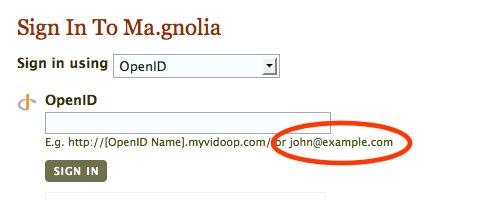
Will Norris hat EAUT außerdem in sein OpenID WordPress Plugin (Version 2.2.0) implementiert.

Heute morgen hat David Recordon (von SixApart) auf der OSCON die Gründung der Open Web Foundation angekündigt.
Open Web Foundation versus DataPortability?
Im Gegensatz zu Portable Contacts sehe ich in der Open Web Foundation einen wirklichen Sinn, eigentlich sogar eine Notwendigkeit um sinnvoll DataPortability betreiben zu können. Die OWF wurde ins Leben gerufen um Communities beim implementieren von offenen Standards unter die Arme zu greifen.
Following the open source model similar to the Apache Software Foundation, the foundation is aimed at building a lightweight framework to help communities deal with the legal requirements necessary to create successful and widely adopted specification.
OWF schafft mit der Verbreitung von Open Standards also eine solide Grundlage um effektiv <Hier bitte Buzzword eintragen>Portability betreiben zu können.
Das Abbilden der, von der DataPortability definierten UseCases ist dann eigentlich nur noch Fleißarbeit 🙂
Ein HOCH auf Open Standards!
(via)
(mehr …)Auf der OSCON bzw. dem XMPP Summit (5) gab es einen interessanten Vortrag von Kellan Elliot-McCrea und Rabble wie man Authorization Tokens über XMPPs PubSub austauschen kann.
Peter Saint-Andre hat zusätzlich noch ein kleines Beispiel auf seinem Weblog veröffentlicht, wie der Ablauf eines solchen Austausches aussehen könnte.
Scenario: I want my Twhirl client to receive Kellan’s tune stream from last.fm via XMPP.
Weiter Links zu dem Thema:
(via)
MarsEdit unterstützt ab der Version 2.2 auch AtomPub als Remote-Publishing-Protocol.
WordPress bietet AtomPub übrigens seit der Version 2.3 auch als Alternative zu XML-RPC an.
Gestern habe ich durch Zufall den Schuldigen für die abbr-desing-pattern – Misere gefunden… Der Safari ist Schuld!
Ursprünglich war das object-Tag zum Anzeigen des Datums vorgesehen:
<object data="20050125">January 25</object>Code-Sprache: HTML, XML (xml)Aber…
Unfortunately, to put it mildly, Safari’s
<object>support sucks. It doesn’t handle<object>fallbacks, it doesn’t know when not to handle<object>mime types that it doesn’t support, it doesn’t supportdisplay:inlineon<object>, and it doesn’t do proper intrinsic sizing of<object>replaced elements.
DANKE SAFARI! 😉
Quelle: Tantek’s Thoughts
David Larlet hat auf SemanticDjango.org eine beachtliche Liste an Python-Klassen (hauptsächlich für das Django-Framework) zusammen getragen, die das Verarbeiten und Portieren von Daten ermöglichen (z.B. OpenID, OAuth, RDF oder Microformats).
.. data is more important than code and if you store, manipulate, give access to your data in a standard way you’ll be able to interact with other website as part of the Giant Global Graph.
Hat nicht jemand Lust ein SemanticSymfony zu basteln?
Toby Inkster beschreibt auf seinem Blog sehr anschaulich, wie man eine hCard mit RDFa-Informationen erweitern kann.
While hCard offers many useful properties that can be used to describe contacts, some are considered beyond the scope of the hCard specification. For example, there is no hCard property to mark up somebody’s height, or shoe size.
This is where RDFa comes in. RDFa is not a specialist format for describing people or organisations, but a more general format for describing anything. We can use RDFa to add in the extra information we want.
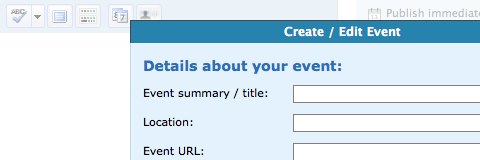
hCard– und hCalendar-Plugin für TinyMCE… und da TinyMCE auch der WordPress-WYSIWYG-Editor ist, gibts das Paket zusätzlich noch als WordPress-Plugin.