Zum Inhalt springen

notizBlog

  • About
  • Follow me
  • Kontakt
  • Appearances
    • /now
    • /slashes
    • Appearances
    • Archiv
    • Blank
    • Blogrolle
    • Changelog
    • Datenschutzerklärung
    • Donate
    • Follow me
    • Followers
    • Impressum
    • Thanks! ❤️🙌
    • About (me)
      • notiz.Blog
    • Projekte
      • APML for WordPress
      • Autonomie
      • hAudio (Microformats) Icons
      • hCard Commenting
      • Microformats Icons
      • MicroK2 – microformats custom theme for K2
      • Mycroformats
      • Operator User Scripts
      • Save Microformats
      • SemPress
      • Simple coComments
    • Artikel
    • Kontakt
  • Standard

    Mr. T versus Wolverine

    Benutzerbild von Matthias Pfefferle

    by

    Matthias Pfefferle

    1. April 2008
    Kult & Nostalgie

    MohawkMedia (Die Macher des neuen Mr. T – Comics) setzen die Reihe „Mr. T vs. Everything“ jetzt auch in ihren Comics um.

    Mein Favorit: Mr. T vs. Wolverine

    TvsClaw.jpg


    Quelle: mohawkmedia.co.uk

    Schade dass es sich bei dieser Ankündigung nur um einen Aprilscherz handelt 🙂

    Keine Kommentare zu Mr. T versus Wolverine
  • Standard

    Microformats Profile URIs

    Benutzerbild von Matthias Pfefferle

    by

    Matthias Pfefferle

    1. April 2008
    Open Web

    Um auf die im HTML-Quellcode verwendeten Microformats hinweisen zu können, wurden vom Microformats-Team jetzt einheitliche Profile URIs veröffentlicht. Berücksichtigt wurden alle non-draft Microformats (Stand: März 2008) ausgenommen XOXO und XMDP:

    SpecificationProfile(s)
    geo http://purl.org/uF/geo/0.9/
    hAtom http://purl.org/uF/hAtom/0.1/
    hCalendar http://purl.org/uF/hCalendar/1.0/
    hCard http://www.w3.org/2006/03/hcard or http://purl.org/uF/hCard/1.0/
    hResume http://microformats.org/wiki/hresume-profile
    rel-license http://purl.org/uF/rel-license/1.0/
    rel-nofollow http://purl.org/uF/rel-nofollow/1.0/
    rel-tag http://purl.org/uF/rel-tag/1.0/
    VoteLinks http://purl.org/uF/VoteLinks/1.0/
    XFN http://gmpg.org/xfn/11

    Eine komplette Übersicht findet man auch über purl.org/uF/2008/03/ oder im Microformats Wiki.

    Diese URIs können, gemäß der W3C namespace policy <head /> der HTML Datei angegeben werden. Beispiel:

    <head profile="http://www.ietf.org/rfc/rfc2731.txt
                   http://www.w3.org/2006/03/hcard
                   http://purl.org/uF/hAtom/0.1/">Code-Sprache: HTML, XML (xml)

    Quelle: ‘This Week in Microformats’ für März.

    Keine Kommentare zu Microformats Profile URIs
  • Standard

    hCard Mapper

    Benutzerbild von Matthias Pfefferle

    by

    Matthias Pfefferle

    28. März 2008
    Open Web

    …oder How to use hCards to fill in forms.

    hCardMapper ist eine JavaScript-Klasse (basierend auf Prototype) um Kontakt- oder Profil-Formulare mit Hilfe einer hCard automatisch zu füllen, ähnlich wie bei bragster.com oder getsatisfaction.com.

    Das schöne an hCardMapper ist seine flexible Struktur. Die JavaScript Klasse ist so aufgebaut, dass sie eigentlich Microformats-Parser unabhängig funktionieren sollte, da sie die Daten über einen „Proxy“ abfrägt. Die einzige Vorgabe ist, dass dieser Proxy eine JSON formatierte hCard (jCard) zurückgibt. Das Problematische an dieser Variante ist, dass jeder Parser unterschiedliche Ergebnisse liefert… ich werde es heute abend mal mit dem hKit-Parser testen.

    Ein weiter Vorteil ist die Formular-Unabhängige Programmierung die es ermöglicht, das Script auch problemlos auf vorhandene Formulare anzuwenden. Über mappnings werden die hCard-Attribute den entsprechenden Formular-Felder zugeordnet.

    Event.observe(window, 'load', function() {
      hcr = new com.omniacomputing.HCardMapper({
        register: true,
        proxy: '/hcardmapper/hcard?uri=',
        insertBelowEl: 'hcr-hook',
        mappings: {
          given_name: 'first',
          family_name: 'last',
          tel: {tel: 'phone', work: 'phone', cell:'phone'},
          email: 'email',
          org: {org: 'company', organization_name: 'company'},
          url: 'website',
          street_address: 'street',
          postal_code: 'zip',
          locality: 'town' 
        }
      })
    });Code-Sprache: JavaScript (javascript)

    Quelle: http://lib.omnia-computing.de/hcardmapper

    Tolle Idee, mal schau’n wie gut das Script mit den (oben schon erwähnten) unterschiedlichen Verarbeitungsweisen der Parser umgeht…

    Keine Kommentare zu hCard Mapper
  • Standard

    DataPortability für Desktop-Anwendungen

    Benutzerbild von Matthias Pfefferle

    by

    Matthias Pfefferle

    27. März 2008
    Open Web

    Anfang Februar habe ich einen interessanten Bericht über „How portable is your Skype data?“ von Phil Wolff gelesen. Der Artikel befasst sich mit der Daten-Portabilität von Nicht-Web-Applikationen am Beispiel von Skype. Leider wird diese Art des Datenaustauschs (z.B. zwischen Desktop-Anwendungen und Web-Anwendungen) auch von DataPortability.org noch nicht ausreichend behandelt und es fehlen Formate die diese Art von Austausch ermöglichen (APML mal ausgenommen).

    Genau diesen Bericht müssen auch Microsoft und Google gelesen haben bevor beide diesen Monat ihre Contacts-APIs veröffentlichten 🙂

    Nach den Beschreibungen von Google:

    • Import a user’s Google contacts into their web or desktop application
    • Export their application’s contact list to Google
    • Write sync applications for mobile devices or popular, desktop-based contact management applications

    …und Microsoft:

    To tackle the issue of contact data portability it is important to reconcile the larger issue of data ownership. Who owns the data, like email addresses in a Windows Live Hotmail address book? We firmly believe that we are simply stewards of customers’ data and that customers should be able to choose how they control and share their data. We think customers should be able to share their data in the most safe and secure way possible, but historically this openness has been achieved largely through a mechanism called “screen-scraping,” which unduly puts customers at risk for phishing attacks, identity fraud, and spam. Now with the Windows Live Contacts API, we have provided an alternative to “screen-scraping” that is equally open but unequivocally safer and more secure for customers.

    …könnte man fast meinen, dass die Hürde des Datenaustauschs zwischen Desktop-Anwendungen und Web-Anwendungen überwunden wäre.

    Nicht ganz… Leider basieren beide Systeme „noch“ auf proprietären Webservices und müssen unterschiedlich angesprochen werden, was eine Menge zusätzlichen Entwicklungsaufwand bedeutet. Die wesentlich bessere Lösung wäre natürlich eine einheitliche Contacts-API oder wie Carsten Pötter meint:

    Of course, it was great if a more open protocol like OAuth was used, but the announcement might encourage more social networks and other corporations to pursue similar steps.

    Immerhin gehören die Social-Network-Anti-Patterns durch diese Entwicklungen hoffentlich bald der Vergangenheit an…

    Keine Kommentare zu DataPortability für Desktop-Anwendungen
  • Standard

    Mr. T bekommt eine neue Comic-Serie

    Benutzerbild von Matthias Pfefferle

    by

    Matthias Pfefferle

    26. März 2008
    Kult & Nostalgie

    Der englische Verlag Mohawk Media will noch im Frühling diesen Jahres eine neue Comic-Reihe mit Mr. T herausbringen. Wer es (wie ich) nicht bis zum offiziellen Start aushält, kann sich die „Mr. T graphic novel – Limited Advance Edition“ jetzt schon bestellen.

    mr-t-comic.jpeg

    Die Limited Advance Edition liegt jetzt schon seit Ostern bei mir rum, aber ich habe mich noch nicht dran gewagt 🙂

    Mal schau’n ob es mit der Kult-Reihe „Mr. T and the T-Force“ aus den 90ern mithalten kann.

    Ach ja… Mr. T war sogar schon im Muppet-Magazin 🙂

    Keine Kommentare zu Mr. T bekommt eine neue Comic-Serie
  • Standard

    hCard-Commenting 0.6.1

    Benutzerbild von Matthias Pfefferle

    by

    Matthias Pfefferle

    18. März 2008
    Open Web

    hCard-Commenting 0.6.1 is available. Changes in this version:

    • Added support for representative hCard
    • Fixed a problem with jQuery ajax-requests and absolute urls (jQuery 1.2.2)
    • Added the parser request-parameters as WordPress query-vars
    Keine Kommentare zu hCard-Commenting 0.6.1
  • Kurzmitteilung

    Operator 0.9 Final

    Benutzerbild von Matthias Pfefferle

    by

    Matthias Pfefferle

    18. März 2008
    nur mal kurz, Open Web

    Operator 0.9 ist in der finalen Version erhältlich. Neu in dieser Version ist unter anderem:

    • Songbird support!
    • A new RDFa parser based on the new spec (pages will need to be updated)
    • mehr…
    Keine Kommentare zu Operator 0.9 Final
  • Standard

    Welche hCard ist die richtige?

    Benutzerbild von Matthias Pfefferle

    by

    Matthias Pfefferle

    16. März 2008
    Open Web

    Wer schonmal versucht hat hCard Profile zu importieren wird sicherlich auf ein Problem stoßen: Welche hCard ist die richtige?

    Vor ein paar Tagen habe ich ein Gespräch zwischen Dirk Olbertz und Tantek Çelik via Twitter verfolgt, bei dem es genau um dieses Problem ging…

    Das Problem der representative hCard kann auf zwei verschiedene Weisen gelöst werden:

    …in short 1. url==uid==source. 2. url has rel-me

    url==uid==source

    Die einfachste Möglichkeit ist, zu überprüfen ob eine der (unter der angegebenen Source-URL) gefundenen hCards als URL die die Source-URL enthält. Wenn man sicher gehen will, sollte man die URL zusätzlich noch als UID (RFC2426) auszeichnen.

    Ein Beispiel für eine representative hCard für wäre:

    <span class="vcard">
    	<span class="fn">Carsten Pötter</span>
    	<span class="url uid">http://notsorelevant.com</span>
    </span>Code-Sprache: HTML, XML (xml)

    rel-me

    Die zweite Möglichkeit ist, nach hCards mit rel="me" URLs zu suchen.

    Diese Variante lässt sich natürlich auch mit der Ersten verbinden:

    <span class="vcard">
    	<span class="fn">Carsten Pötter</span>
    	<span class="url uid" rel="me">http://notsorelevant.com</span>
    </span>Code-Sprache: HTML, XML (xml)

    Wer also ganz sicher gehen möchte sollte das letzte Beispiel nutzen 🙂

    Für Web-Seiten die gar keine Profile oder zumindest keine Profile auf der Startseite haben, könnte rel="me" auch als Delegation zu einer (anderen) Seite mit einer representative hCard genutzt werden.

    Beispiel: <link rel="me" href="http://www.notsorelevant.com/ueber/" />

    Da es für PHP (meines Wissens) noch keinen XFN-Parser gibt, habe ich mich beim hCard-Commenting WordPress Plugin für die erste Variante (url==uid==source) entschieden… Ich hoffe es funktioniert 🙂

    Weitere Informationen zu representative hCards im Microformats-Wiki:

    • representative hCard
    • representative hCard parsing
    • rel-me
    1 Kommentar zu Welche hCard ist die richtige?
  • Standard

    Yahoo! plant Semantic-Search

    Benutzerbild von Matthias Pfefferle

    by

    Matthias Pfefferle

    13. März 2008
    Open Web
    Semantic Web Cube

    Amit Kumar (Director, Product Management, Yahoo! Search) hat heute weitere Details der geplanten Yahoo! Search open platform veröffentlicht.

    Der erste Punkt ist der Support einer großen Spanne an Web-Semantiken wie z.B. RDF, Microformats und OpenSearch:

    Initially, we plan to support a number of microformats, including hCard, hCalendar, hReview, hAtom, and XFN. Yahoo! Search will work with the web community to evolve the vocabulary framework for embedding structured data. For starters, we plan to support vocabulary components from Dublin Core, Creative Commons, FOAF, GeoRSS, MediaRSS, and others based on feedback. And, we will support RDFa and eRDF markup to embed these into existing HTML pages.

    Ein Beispiel für eine semantische Suche hat Yahoo! ja schon mit seiner Microsearch gezeigt.

    Der zweite wesentliche Punkt ist, dass die Yahoo! Search open platform offen für third-party Developers sein wird. Es wird also möglich sein, über eine API auf die strukturierten Inhalte aus dem Yahoo! Index zuzugreifen.

    Hört sich sehr spannend an, bin gespannt auf die Umsetzung und die Möglichkeiten der API.

    Wer sich für die open search platform anmelden möchte, kann das hier tun.

    via microformatique.com

    Weitere Infromationen:

    • The Yahoo! Search Open Ecosystem
    • And Nerds Became Kings: Yahoo! to Announce Semantic Web Support
    • Semantic Yahoo!
    1 Kommentar zu Yahoo! plant Semantic-Search
  • Standard

    Homo Animatus

    Benutzerbild von Matthias Pfefferle

    by

    Matthias Pfefferle

    12. März 2008
    Kult & Nostalgie

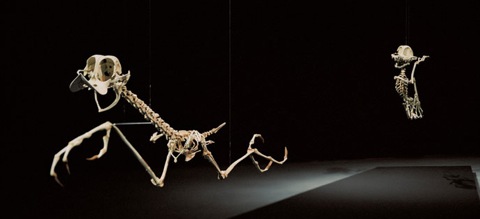
    Homo Animatus ist eine Arbeit von Hyungkoo Lee und zeigt, wie das Innenleben von Cartoon Figuren aussieht.

    Homo Animatus was an extension of a series of earlier pieces where the artist physically sought to alter – to reduce to cartoon simplicity – his own anatomy.

    Ich will den Canis Latrans Animatus für meine Wohnung 🙂

    Mal schaun ob jemand alle Figuren erkennt…

    020L.jpg

    Canis Latrans Animatus und Geococcyx Animatus (Quelle: hyungkoolee.net)

    027_02L.jpg

    Anas Animatus (Quelle: hyungkoolee.net)

    (mehr …)
    6 Kommentare zu Homo Animatus
←Vorherige Seite
1 … 44 45 46 47 48 … 78
Nächste Seite→

notizBlog

  • /now
  • /slashes
  • Appearances
  • Blogroll
  • Changelog
  • Datenschutzerklärung
  • Donate
  • Follow me
  • Followers
  • Impressum
  • notiz.Blog
  • Thanks! ❤️🙌
  • About
  • Projekte
  • Artikel
  • Kontakt
  • I ❤️ RSS

← IndieWebring →

← Fediring →

This site is powered by WordPress and styled with the Autonomie theme