Elan aus dem XBMC Forum hat aus Frust über Apple’s Front Row angefangen das XBMC Media Center für den Mac zu portieren.
I’ve begun porting the code over to Mac OS X 10.5.1, because I’m annoying at how crappy Front Row is, and I’ve been wanting to use my Mac as a media center. I will have the TV connected to the second DVI port, so I can’t just install Linux #
Ein erster Screenshot von XBMC aufm Mac:
Die aktuellen Binaries (letztes Update: XBMC-0.1.1.dmg) kann man hier runter laden.
Seine Fortschritte mit OSXBMC dokumentiert Elan auf seinem Weblog OSXBMC.com oder im XBMC Forum.
Ich hoffe ich bekomme bald mein Mac OS X Leopard um das alles mal auszuprobieren…
Gestern vor vier Jahren hielten Tantek Çelik and Kevin Marks eine Präsentation über „real world semantics“. Die Präsentation machte an Beispielen wie XFN und einigen rel-Design-Pattern klar, wie es Designern und Entwicklern möglich ist, mit bestehenden Formaten wie X/HTML semantisch zu arbeiten.
Mittlerweile hat sich aus ein paar HTML Design Pattern eine große Open-Standards-Bewegung entwickelt, aus der noch mind. ein Duzent neuer (sog.) Mikroformate heraus entstanden sind. Microformats wie z.B. die hCard oder XFN sind heute Basis von weiteren Open-Standard-Groups wie z.B. Data- oder Social-Network-Portability und große Unternehmen wie Google, Yahoo, Apple oder Mozilla setzen auf ein breites Spektrum dieser „real world semantics“.
Wahrscheinlich haben Microformats gerade durch ihren pragmatischen Ansatz die Semantic Web Idee einen ganzen Schritt voran getrieben und gezeigt, dass Semantiken nicht nur mit RDF oder OWL sondern auch mit simplen HTML class– und rel-Attributen möglich ist.
Vielen Dank an alle Entwickler und Designer die die Microformats Idee voran getrieben haben und vor allem an Tantek…
Wie schon mehrfachberichtet wurde, hat Google mit der Social Graph API einen großen Schritt in Richtung DataPortability gemacht. Die Social Graph API ist eine weiterer Coup von Brad Fitzpatrick (Live Journal, memcached und OpenID) und bietet eine einfache API um „public connections“ die man zu genüge im Netz erstellt hat zu interpretieren um wiederverwendbar zu machen.
With the Social Graph API, developers can now utilize public connections their users have already created in other web services. It makes information about public connections between people easily available and useful.
Die Google API setzt hauptsätzlich auf das MicroformatXFN (V 1.1) zum darstellen des Sozialen Netzes.
XHTML Friends Network benutzt das rel Attribut von Links um Verbindungen zwischen Personen darzustellen. <a rel="me" /> kennzeichnet z.B. eine weitere Webseite des Verlinkenden. Weitere Formate (bei Google Edge Types) sind das auf RDF basierende FoaF und OpenID delegation Links <link rel="openid.delegate" />.
Die API ist recht simple und lässt sich komplett über URL Key/Value Paare konfigurieren…
Da ich gerade geschäftlich etwas im Stress bin und die letzten Tage nicht vor 20 Uhr nach Hause gekommen bin, wird es die nächsten Tage nur kleinere Posts geben. Ich hoffe das pendelt sich nächste Woche wieder einigermassen ein…
Zum Thema… Vorgestern hat Matt Mullenweg (der Gründer von Automattic) ein neues Theme mit Namen „Prologue“ vorgestellt. Das Besondere an Prologue ist sein simpler Aufbau und die Ähnlichkeit zu Twitter.
Die Idee für das Theme kam folgendermassen:
[…] like a way for each of us to share short messages about what we’re doing or working on internally, or private messages between groups of folks.
…und genau das ist leider auch das Manko an Prologue. Das Theme ist so aufgebaut, dass von jedem Autor nur der neuste Post angezeigt wird, d.h. es wird nur ein Post angezeigt wenn man es alleine verwendet 🙁 . Eigentlich schade, weil ich Twitter sehr mag und das schlichte Design von Prologue sehr schick finde. Aber vielleicht habe ich ja doch Glück und jemand nimmt sich das Theme nochmal vor:
This isn’t something we’re personally interested in, but we’ve made the theme available as open source under the GPL so if you want to hack around it yourself you’re welcome to.
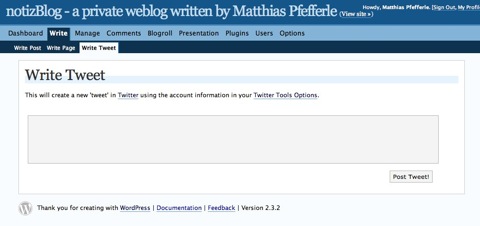
Wo wir gerade bei WordPress und Twitter sind… Twitter Tools ist ein umfassendes Twitter Plugin für WordPress, um Daten in allen Variationen zwischen Twitter und WordPress auszutauschen.
You can search through my blog using your APML file and there is also a sidebar-widget with some meta-informations. Sample: https://notiz.blog/apml/search/?s=http://notsorelevant.com/wp-apml.php
What do you think about it? Any ideas to make something better?
If there are no more suggestions and if everythinks works fine, I would release it in the next few days.
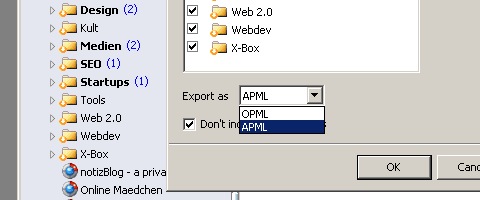
Es handelt bei dem Feed-APML also um eine Art OPML-File mir Bewertung.
OPML: <outline text="Not So Relevant" title="Not So Relevant" type="rss" xmlUrl="http://feeds.feedburner.com/notsorelevant" htmlUrl="http://www.notsorelevant.com" description="another look on music and the web"/>
Wer genau wissen will wie sich der value Wert errechnet, kann ja mal den „How Does FeedDemon Calculate Attention?“ – Artikel bei Nick Bradbury lesen. Mal gespannt wie die APML-Importfunktion aussehen wird und wann die anderen Feed Reader von newsgator nachziehen werden.
This plugin creates an APML Feed using the the native tags and categories of WordPress 2.3.x, but it also supports UltimateTagWarrior and SimpleTagging for WordPress 2.0.11 – 2.2.x.
New Features:
Native WordPress Plugin
One version for WordPress 2.x up to 2.3.x
Permalinks support
Supports native Tagging as well as UltimateTagWarrior/SimpleTagging
Demo: http://notiz.blog/apml/.
Possible features for the next Versions:
Sidebar widget
I plan to integrate some kind of search which supports apml files…
GraphSync ist ein weiteres DataPortability Projekt und richtet sich hauptsächlich an Entwickler. Das Projekt hat das Ziel, ähnlich wie auch DiSo, Daten wie z.B. Profile oder IM Kontakte wiederverwertbar zu machen (Social Network Portability oder Data Portability).
Bei GraphSync geht es aber nicht, wie beim DiSo, darum seine Daten und Netze an zentraler Stelle zu vereinen um sie mit in die verschiedenen Communities zu nehmen, sondern um das genaue Gegenteil:
Pick a proprietary silo of user’s personal social data
Write some open source code to extract their data
Place their data into the open formats listed below.
Link to the code repository on the DataPortability Wiki.
Win the love and admiration of a grateful community
Ziel ist es, proprietäre Daten aus Communities zu extrahieren, um sie dann mit Hilfe von Offenen Standards portabel zu machen. Die von GraphSync vorgeschlagenen Formate sind:
Brian: I like to talk about microformats as “semantic sugar”. Everyone can understand that adding a little bit of sugar to your food you make it taste better. Adding microformats into your HTML makes it “taste” a little better too!
I wrote a small APML Plugin/Extension for WordPress, as I mentioned some posts before. The Script creates an APML feed using the WordPress Categories and Tags.