Schlagwort: FediBlog

  • Spätestens jetzt sollte ja wirklich jeder Internet-Bewohner seine eigene OpenID haben… ob er weiß ist eine andere Geschichte 🙂

    …und das sollte doch wiederum Grund genug sein seine Seite sofort OpenID tauglich zu machen, nachher wissen die armen Menschen gar nicht wohin mit ihrer OpenID…

    Spaß beiseite… natürlich besteht generell nicht das Problem an fehlenden OpenID-Providern, aber die Ankündigungen von Microsoft und Google sollten bisherigen Zweifeln dennoch signalisieren, dass OpenID der aktuelle de facto Standard für Single Sign-On im Web sein dürfte.

    Mehr zu dem Thema:

  • Twitter

    Pixelsebi hatte die großartige Idee zu einem Open Web – Podcast. Ich hoffe wir bekommen das gebacken 🙂

  • Dass sich das Portable Contacts Schema trotz der Aussage:

    Third, we’re reusing existing standards wherever possible, including vCard, OpenSocial, XRDS-Simple, OAuth, etc.

    von dem des v/hCard Schema unterscheidet, habe ich ja schon vor einigen Wochen erläutert:

    Schade dass die vCard nicht zu 100% übernommen wurde… sonst hätte man ohne größere Änderungen auch die JSON-Serialisierte hCard (jCard) in den Prozess integrieren können. Spannend wäre es vor allem für Services wie Twitter, die das Freundesnetzwerk sowieso mit hCards auszeichnen.

    Aber das schöne an Standards ist, dass sie sich ohne großen Aufwand in andere transformieren lassen. Magdex (die Firma hinter UfXtract und OAuth.net) bietet eine Reihe dieser Transformatoren um z.B. hCards, hCards + XFN oder hResumes in das Portable Contacts – Format zu bringen.

    …jetzt das ganze nur noch mit OAuth schützen und fertig ist die Portable Contacts API 🙂

    (via)

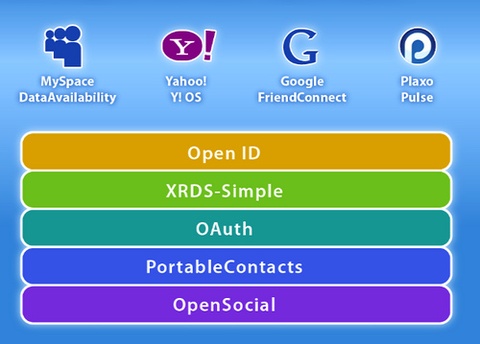
  • So zu sagen das OSI-Model des Social Webs.

    open-stack.jpg


    Quelle: John McCrea

    Aus Joseph Smarrs Präsentation Implementing the Open Web, gehalten auf der Web 2.0 Expo in New York.

  • Will Norris hat vorgestern ausführlich über die neuen Features seines WordPress-Plugins berichtet. Das wohl interessanteste Feature von wp-openid 3.0 ist der neue OpenID-Provider:

    The next major release of wp-openid includes a built-in OpenID provider and delegation engine. This will certainly be the most exciting feature of this release for most people, so let me explain a bit how it works. Each authorized user on the WordPress blog will have an OpenID at the author posts URL (ie. http://example.com/author/admin). Authorization to use the OpenID provider is controlled based on user roles and is managed in the main OpenID settings page.

    Das Plugin kann in zwei verschiedenen Modi betrieben werden. Multi-user erstellt aus jeder Autor-URL (z.B. http://example.com/author/admin/) eine OpenID während blog-owner für Private-Blogs mit nur einem Autor gedacht ist und die Home-URL zur OpenID (z.B. http://example.com) macht:

    In multi-user, the default configuration, the server supports a feature in OpenID 2.0 called OpenID Provider driven identifier selection. What this means is that ANY user on that blog can enter the home URL as their OpenID, and the OpenID provider itself will make sure that the correct identifier is returned to the relying party. The final identifier will still be something like http://example.com/author/admin/, but the user only needs to enter example.com at a relying party. If you’ve used ever used Yahoo’s OpenID provider, then you’ve probably seen how this works.

    Zwei weitere spannende Features sind die Hooks, als Schnittstelle für z.B. andere Plugins…

    I haven’t sat down to document them all yet, but I’m adding in more hooks for other plugins to add functionality. Want to pull profile data from FOAF instead of sreg? No problem, now you have a hook you can implement. This makes everything in the plugin much more lightweight and “loosely joined” which is always good. All of the existing non-core OpenID functionality (like SREG) is currently using these hooks.

    …und die Unterstützung des OpenID-Firefox-Plugins (welches übrigens auch mit der Version 2.x funktioniert) über das DiSo XRDS-Simple Plugin.

    Ich habe das Plugin bisher nur einmal ausprobiert, da es noch einige kleine Fehler hat und die Admin-Oberfläche des OpenID-Providers noch gänzlich fehlt. Trotz dieser kleinen Fehler merkt man, dass sich Will Norris für diese Version sehr viel Zeit (die er sicherlich auch hatte) genommen hat und ich bin sehr gespannt auf die fertige Version.

    Wer sich nochmal ausführlich mit den Features beschäftigen will, sollte unbedingt Will Norris‘ Artikel darüber lesen:

  • NoseRub hat ein WordPress-Plugin:

    If you have an account on a social network site powered by NoseRub, i.e. identoo.com
    this plugin provides a couple of widgets to show your lifestream your hCard, your contacts
    and, on newer installations of NoseRub, your services.

    You can also choose to use your weblog as an OpenID-URL, powered by your NoseRub account.

    …außerdem wurde noch ne ganze Menge XFN verwendet 🙂

    Mal schau’n was Dominik Schwind auf dem nächsten NoseRub-DevCamp so zaubert.

  • David Recordon stellt auf O’Reilly – Radar zwei der spannendsten Ergebnisse des gestrigen PortableContacts Hackathon (bei Six Apart) vor:

    Joseph Smarr and Kevin Marks of Google hacked together a web transformer that integrates Microformats, vCard, and the Portable Contacts API. Given Kevin’s homepage which is full of Microformats, they’ve built an API that extracts his profile information from hCard, uses a public API from Technorati to transform it to vCard, and then exposes it as a Portable Contacts API endpoint. Not only does this work on Kevin’s own page, but his Twitter profile as well which contains basic profile information such as name, homepage, and a short bio.

    Ein schönes Beispiel was man mit semantisch ausgezeichneten Informationen machen kann und dass Microformats eben auch (ohne viel Aufwand und mit ein bisschen Transformation) in höherwertige APIs integriert werden können… also keine hCard wurde umsonst geschrieben 🙂

    Brian Ellin of JanRain has successfully combined OpenID, XRDS-Simple, OAuth, and the Portable Contacts API to start showing how each of these building blocks should come together. Upon visiting his demo site he logs in using his OpenID. From there, the site discovers that Plaxo hosts his address book and requests access to it via OAuth. Finishing the flow, his demo site uses the Portable Contacts API to access information about his contacts directly from Plaxo. End to end, login with an OpenID and finish by giving the site access to your address book without having to fork over your password.

    Dazu brauche ich nicht mehr sagen, als: Implementieren! Sofort und überall 😉

  • Anlässlich des gestrigen PortableContacts Hackathon bei Six Apart (Impressionen) und dem heutigen PortableContacts-Summit bei myspace beschäftigt sich die aktuelle SocialWeb.TV – Folge fast ausschließlich mit dem neuen „Building-Block“.

    Zwar ist die Kritik von Stephen Paul Weber (der DiSo Code-Maschine):

    Portable Contacts is an open spec – but it’s a bit of a stretch to call something a few days old and unimplemented as yet a „standard“.

    nicht ganz abwegig aber Joseph Smarr (Plaxo), der Initiator von Portable Contacts, überzeugt mit einigen Argumenten warum sich das bald ändern könnte. Portable Contacts baut ausschließlich auf offenen Standards (OAuth, XRDS-Simple, JSON) auf und nutzt die gleiche Vorgehensweise wie die OpenSocial RESTful-API. Diese Eigenschaften machen neue Code-Libraries fast überflüssig (da PC eigentlich nur bestehende Standards sinnvoll verbindet) und gestalten die Implementierung, bei schon implementierter OS RESTful-API, relativ einfach.

    Glaubt man der Aussage von Joseph im Video, soll der neue Standard noch bis Ende des Jahres nutzbar gemacht werden. Bei den möglichen Implemtoren hält er sich zwar bedeckt, aber wenn auch „nur“ die beiden oben genannten Veranstalter (Six Apart und myspace) und Plaxo diese Schnittstelle umsetzen kann man (trotz Stephens Kritik) wirklich schon fast von einem Open Standard sprechen.

    Bin gespannt auf die Ergebnisse des heutigen Summits…

  • Die beste Methode sich mit einer Sache zu beschäftigen ist, einen sinnvollen Anwendungsfall zu schaffen… Bei dem „näher beschäftigen“ mit Ubiquity ist ein WordPress-Plugin rausgekommen 🙂

    Das WordPress-Plugin erstellt eine Ubiquity-Suche für das eigene Weblog (Quellcode) mit dem Command „search-<Blog-Titel>“

    ubiquity-wordpress-command.jpg

    Das kann teilweise (wie im Falle meines Blogs: search-notizblog-a-private-weblog-written-by-matthias-pfefferle) ziemlich lang werden, was aber nicht weiter schlimm ist da auch schon der Anfang des Commands (z.B. search-notizblog) reicht…

    Viel Spaß beim ausprobieren 🙂

  • Es hat ne ganze Weile gedauert, aber endlich ist eine erste Vorschau von APML 1.0 verfügbar: APML 1.0 Initial Draft

    Unterschiede zu APML 0.6:

    • Neben Concepts und Sources gibt es jetzt auch People und Locations.
    • Optional kann über rdf:about auf andere Semantiken/Ontologien verwiesen werden ohne APML selbst unnötig kompliziert zu machen.

    Es können sich zwar noch Kleinigkeiten ändern:

    This comes with a very large fore note: This is a very early draft only, and nothing is set in stone. Given that the community is obviously itching to start seeing APML 1.0 progress, I felt that it would be an appropriate time to release this and assist in structuring the discussion. I intend to follow
    this with a few more emails that detail individual sections I believe need substantial addressing.

    …aber das grobe Gerüst steht fest. Ich freue mich besonders, dass APML weiterhin so simpel wie möglich bleibt und nicht (wie oft vorgeschlagen) mit RDF-Namespaces arbeitet.

    Wenn sich in den nächsten Tagen nicht mehr viel ändert, werde ich nochmal etwas ausführlicher über die Neuerungen schreiben und mein WordPress-Plugin auf die aktuelle Version bringen…

    (via)