Zum Inhalt springen

notizBlog

  • About
  • Follow me
  • Kontakt
  • Appearances
    • /now
    • /slashes
    • Appearances
    • Archiv
    • Blank
    • Blogrolle
    • Changelog
    • Datenschutzerklärung
    • Donate
    • Follow me
    • Followers
    • Impressum
    • Thanks! ❤️🙌
    • About (me)
      • notiz.Blog
    • Projekte
      • APML for WordPress
      • Autonomie
      • hAudio (Microformats) Icons
      • hCard Commenting
      • Microformats Icons
      • MicroK2 – microformats custom theme for K2
      • Mycroformats
      • Operator User Scripts
      • Save Microformats
      • SemPress
      • Simple coComments
    • Artikel
    • Kontakt
  • Standard

    OpenID, XRDS-Simple, OAuth und Portable Contacts perfekt kombiniert

    Benutzerbild von Matthias Pfefferle

    by

    Matthias Pfefferle

    4. Oktober 2008
    Open Web

    Nach der Demo von Brian Ellin auf dem Portable Contacts Summit…

    Brian Ellin of JanRain has successfully combined OpenID, XRDS-Simple, OAuth, and the Portable Contacts API to start showing how each of these building blocks should come together.

    und der Ankündigung, Portable Contacts in myOpenID zu integrieren…

    Portable Contacts is an emerging standard for transferring profile data and social connections across websites. Look for upcoming support of this new standard in myOpenID!

    …habe ich endlich auch eine funktionierende Demo im Web gefunden. Notwendig für die Testanwendung sind ein myOpenID Profil und ein Plaxo-Account.

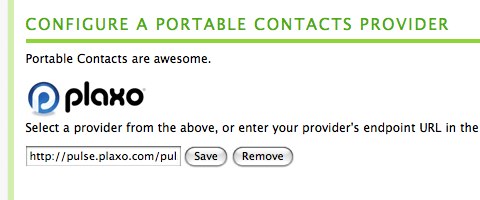
    Zuerst muss man über den myOpenID Einstellungen Plaxo als seinen Portable Contacts – Provider angeben,
    openid-porc.jpg

    sich mit seiner OpenID an der Demoseite anmelden,

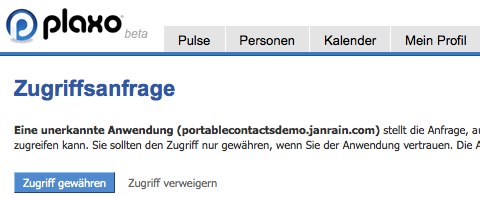
    den Zugriff auf die eigenen Daten gewähren
    Plaxo Pulse.jpg

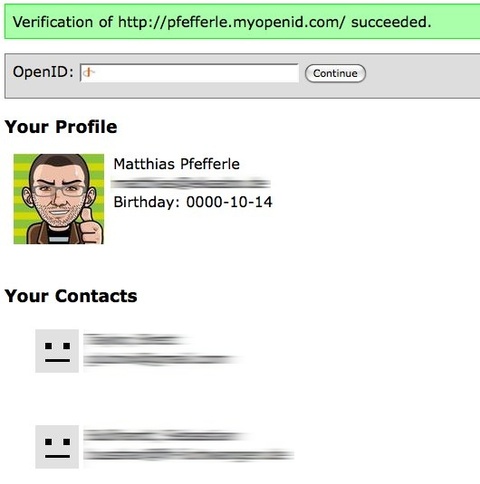
    und die Demo-Anwendung bekommt meine Kontakte übermittelt.
    OpenID with Portable Contacts Demo.jpg

    Im besten Fall laufen diese Schritte völlig automatisch ab und der Anwender hat nicht mehr zu tun als seine Einverständniserklärung per Knopfdruck zu geben. Ein schöner Anwendungsfall für dieses Beispiel wäre z.B. eine OpenID-Neuanmeldung bei einer Community mit anschließendem Import aller Kontakte.

    Was ich an diesem Beispiel außerdem sehr schätze ist, dass JanRain die Portable Contacts API in seinen OpenID-Provider integriert hat ohne sie wirklich integriert zu haben… Der Fokus von myOpenID bleibt weiterhin auf OpenID und die Portable Contacts Anfragen werden lediglich über XRDS-Simple an z.B. Plaxo weiterdelegiert.

    So zentral kann dezentral sein 🙂
    1 Kommentar zu OpenID, XRDS-Simple, OAuth und Portable Contacts perfekt kombiniert
  • Link

    OpenID nach Rezept

    Benutzerbild von Matthias Pfefferle

    by

    Matthias Pfefferle

    26. September 2008
    Open Web

    Joseph Smarrs Rezept, wie man OpenID nachträglich in eine bestehende Community integriert:

    This is a step-by-step tutorial guide for implementing OpenID consumer-side support with a web site that already has users with accounts. It will explain how to easily let new users sign up for an account on your site using their OpenID URL and how to let existing users attach their OpenID(s) so they can sign in using them.

    3 Kommentare zu OpenID nach Rezept
  • Audio

    DiSo: Activity Streams Meeting

    Benutzerbild von Matthias Pfefferle

    by

    Matthias Pfefferle

    25. September 2008
    Open Web

    Seit gestern kann man sich den Audio-Mitschnitt vom Activity Streams Meeting über die DiSo-Google-Group runterladen/anhören.

    Ziel des Meetings war:

    The goal of this meeting is to review Jonathan Dugan’s work on his Activity Streams Rails plugin, to take a look at OpenSocial templates and their relevance to Activity Streams and begin to spec out (more formally) the foundational components of the Activity Streams draft spec.

    3 Kommentare zu DiSo: Activity Streams Meeting
  • Audio

    ReadWriteTalk: DataPortability

    Benutzerbild von Matthias Pfefferle

    by

    Matthias Pfefferle

    24. September 2008
    Open Web

    Chris Saad (Co-founder, DataPortability.org), Daniela Barbosa (Chair, DataPortability.org), Eran Hammer-Lahav (Open Standards Evangelist, Yahoo), Angus Logan (Technical Product Manager for Windows Live Platform, Microsoft) und Chris Messina (aka Factory Joe / Leader of DiSo project) im ReadWriteTalk zum Thema DataPortability.

    Keine Kommentare zu ReadWriteTalk: DataPortability
  • Standard

    One stack to access them all

    Benutzerbild von Matthias Pfefferle

    by

    Matthias Pfefferle

    23. September 2008
    Open Web

    So zu sagen das OSI-Model des Social Webs.

    open-stack.jpg


    Quelle: John McCrea

    Aus Joseph Smarrs Präsentation Implementing the Open Web, gehalten auf der Web 2.0 Expo in New York.

    1 Kommentar zu One stack to access them all
  • Link

    Microformats für Einsteiger

    Benutzerbild von Matthias Pfefferle

    by

    Matthias Pfefferle

    23. September 2008
    Open Web

    Emily Lewis hat ein paar fantastische Artikel über Microformats veröffentlicht. Absolut lesenswert!

    • Getting Semantic With Microformats, Introduction
    • Getting Semantic With Microformats, Part 1: rel
    • Getting Semantic With Microformats, Part 2: XFN
    • Getting Semantic With Microformats, Part 3: hCard
    • Getting Semantic With Microformats, Part 4: hCalendar
    • Getting Semantic With Microformats, Part 5: hAtom
    • Getting Semantic With Microformats, Part 6: hResume
    Keine Kommentare zu Microformats für Einsteiger
  • Video

    Y!OS – Yahoo! Open Strategy

    Benutzerbild von Matthias Pfefferle

    by

    Matthias Pfefferle

    19. September 2008
    Open Web

    Yahoo! Open Strategy

    …und ich dachte Yahoo baut jetzt auch noch ein Betriebssystem.

    Keine Kommentare zu Y!OS – Yahoo! Open Strategy
  • Kurzmitteilung

    ARRRR!

    Benutzerbild von Matthias Pfefferle

    by

    Matthias Pfefferle

    19. September 2008
    Journal

    Browse like a Pirate! ARRRR!

    1 Kommentar zu ARRRR!
  • Standard

    Interessante Portable-Contacts ankündigungen

    Benutzerbild von Matthias Pfefferle

    by

    Matthias Pfefferle

    18. September 2008
    Open Web

    Plaxo setzt voll auf den neuen (großen?) Building-Block Portable Contacts (Portable Contacts is now Plaxo’s primary API):

    We’ve been early adopters and evangelists for several of these building blocks, including OpenID, OAuth, OpenSocial, and microformats. And recently we’ve also helped lead the charge to build another key piece of the „open stack“: a common API standard for accessing address book, profile, and friends-list data called „Portable Contacts“.

    Die API-Section von Plaxo weist jetzt eine beachtliche Anzahl an offenen Standards auf:

    We’ve revamped Plaxo’s developer section to focus primarily on the open building blocks we’re using. Starting now, developers should consider OAuth and Portable Contacts the primary way to access profile, address book, and pulse connections data from Plaxo.

    Vorbildlich!

    Eine weitere Ankündigung (via Newsletter) kommt vom OpenID-Provider myOpenID, der (in Person von Brian Ellin von JanRain) ja schon auf dem PortableContacts Hackathon eine umfassende Demo zum besten geben konnte.

    Portable Contacts is an emerging standard for transferring profile data and social connections across websites. Look for upcoming support of this new standard in myOpenID!

    Dieses Feature würde mich dann doch davon abhalten mein eigener OpenID-Provider zu sein 🙂

    Keine Kommentare zu Interessante Portable-Contacts ankündigungen
  • Standard

    WordPress wird OpenID-Provider

    Benutzerbild von Matthias Pfefferle

    by

    Matthias Pfefferle

    17. September 2008
    Open Web

    Will Norris hat vorgestern ausführlich über die neuen Features seines WordPress-Plugins berichtet. Das wohl interessanteste Feature von wp-openid 3.0 ist der neue OpenID-Provider:

    The next major release of wp-openid includes a built-in OpenID provider and delegation engine. This will certainly be the most exciting feature of this release for most people, so let me explain a bit how it works. Each authorized user on the WordPress blog will have an OpenID at the author posts URL (ie. http://example.com/author/admin). Authorization to use the OpenID provider is controlled based on user roles and is managed in the main OpenID settings page.

    Das Plugin kann in zwei verschiedenen Modi betrieben werden. Multi-user erstellt aus jeder Autor-URL (z.B. http://example.com/author/admin/) eine OpenID während blog-owner für Private-Blogs mit nur einem Autor gedacht ist und die Home-URL zur OpenID (z.B. http://example.com) macht:

    In multi-user, the default configuration, the server supports a feature in OpenID 2.0 called OpenID Provider driven identifier selection. What this means is that ANY user on that blog can enter the home URL as their OpenID, and the OpenID provider itself will make sure that the correct identifier is returned to the relying party. The final identifier will still be something like http://example.com/author/admin/, but the user only needs to enter example.com at a relying party. If you’ve used ever used Yahoo’s OpenID provider, then you’ve probably seen how this works.

    Zwei weitere spannende Features sind die Hooks, als Schnittstelle für z.B. andere Plugins…

    I haven’t sat down to document them all yet, but I’m adding in more hooks for other plugins to add functionality. Want to pull profile data from FOAF instead of sreg? No problem, now you have a hook you can implement. This makes everything in the plugin much more lightweight and “loosely joined” which is always good. All of the existing non-core OpenID functionality (like SREG) is currently using these hooks.

    …und die Unterstützung des OpenID-Firefox-Plugins (welches übrigens auch mit der Version 2.x funktioniert) über das DiSo XRDS-Simple Plugin.

    Ich habe das Plugin bisher nur einmal ausprobiert, da es noch einige kleine Fehler hat und die Admin-Oberfläche des OpenID-Providers noch gänzlich fehlt. Trotz dieser kleinen Fehler merkt man, dass sich Will Norris für diese Version sehr viel Zeit (die er sicherlich auch hatte) genommen hat und ich bin sehr gespannt auf die fertige Version.

    Wer sich nochmal ausführlich mit den Features beschäftigen will, sollte unbedingt Will Norris‘ Artikel darüber lesen:

    • The Next Steps with wp-openid
    • Making the plugin more stable, extensible, and overall simpler
    • OpenID Providing and Delegation
    1 Kommentar zu WordPress wird OpenID-Provider
←Vorherige Seite
1 … 30 31 32 33 34 … 78
Nächste Seite→

notizBlog

  • /now
  • /slashes
  • Appearances
  • Blogroll
  • Changelog
  • Datenschutzerklärung
  • Donate
  • Follow me
  • Followers
  • Impressum
  • notiz.Blog
  • Thanks! ❤️🙌
  • About
  • Projekte
  • Artikel
  • Kontakt
  • I ❤️ RSS

← IndieWebring →

← Fediring →

This site is powered by WordPress and styled with the Autonomie theme